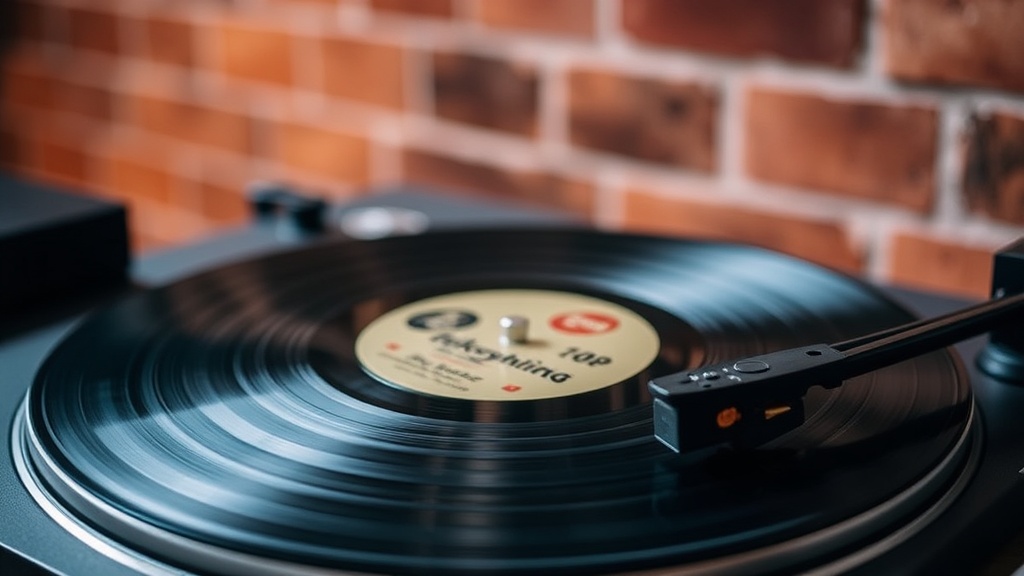
The Complete Guide to Cleaning and Storing Vinyl Records

This post covers the full process of cleaning and storing vinyl records the right way. You'll learn which tools actually work, which habits destroy grooves over time, and how to keep a collection sounding sharp for decades. For anyone who buys records to listen to—not just to display—proper care isn't optional. It's the difference between a collection that appreciates and one that crackles its way to the discount bin.
How do you clean vinyl records without damaging them?
You clean vinyl records with a combination of dry brushing, wet washing, and careful drying—never with household cleaners or paper towels. The grooves on a record are microscopic. One wrong swipe with a rough cloth can leave scratches that no amount of audio restoration will fix.
Here's the thing: surface dust is only half the problem. The real enemy is the oily film that builds up from fingerprints, airborne particles, and the occasional mishandled slice of pizza. That grime gets pressed into the grooves every time the stylus drops.
Dry Cleaning First
Always start with a carbon fiber brush. The Audio-Technica AT6012 and the Mobile Fidelity Sound Lab Record Brush are both solid choices. Hold the brush gently against the spinning platter before the tonearm drops, let it make a few rotations, then lift. Don't scrub back and forth like you're waxing a car—that's a fast track to pushing debris deeper.
For records that look dusty but don't sound noisy, this step is often enough. That said, dry brushing won't remove fingerprints or sticky residue. For that, you need water.
Wet Cleaning Methods
There are three main approaches to wet cleaning: manual baths, vacuum-based record cleaners, and ultrasonic machines. Each has trade-offs in price, convenience, and effectiveness.
| Method | Best For | Price Range | Drawback |
|---|---|---|---|
| Spin-Clean Record Washer | Casual collectors, small collections | $80–$100 | Requires air drying; no vacuum suction |
| Pro-Ject VC-E | Serious listeners, mid-size collections | $400–$500 | Louder motor; single platter design |
| Ultrasonic cleaner (e.g., Degritter) | Audiophiles, high-volume collections | $1,000+ | Expensive; overkill for casual buyers |
The Spin-Clean is the gateway drug for most collectors. It uses a bath of distilled water and a small amount of cleaning solution. You manually rotate the record through the brushes, pull it out, and dry it with a microfiber cloth. It's cheap, effective, and oddly satisfying.
Vacuum machines like the Pro-Ject VC-E or VPI HW-16.5 take things up a notch. They apply cleaning fluid, scrub the grooves with a brush, then suck the dirty liquid off the surface. The result is a visibly cleaner record that often sounds dramatically quieter.
Worth noting: always use distilled water. Tap water contains minerals that leave white residue in the grooves. And never use Windex, isopropyl alcohol at high concentrations, or dish soap. Alcohol can strip anti-static coatings on modern pressings. Dish soap? It leaves a film that attracts more dust.
Drying and Final Inspection
After wet cleaning, let records air dry vertically on a clean rack. Don't stack them wet. Don't use a hair dryer. A few minutes on a dish rack (one you haven't used for spaghetti) works perfectly. Once dry, inspect the surface under a bright lamp. Any remaining spots mean a second pass.
What's the best way to store vinyl records?
The best way to store vinyl records is upright in a cool, dry place—away from direct sunlight, heat vents, and humidity spikes. Records are basically flat pieces of polyvinyl chloride with a paper sandwich glued to the middle. Heat warps them. Sunlight fades covers. Humidity grows mold on sleeves.
Most collectors eventually outgrow the milk crate phase. (Though let's be honest—milk crates do stack nicely.) When it's time to upgrade, IKEA KALLAX shelving units dominate the market for good reason. They're affordable, widely available, and each cube holds roughly 50–60 records in outer sleeves. Just don't overstuff them. Tight packing makes pulling records out a wrestling match.
Sleeves Matter More Than You Think
Original paper inner sleeves are charming. They're also abrasive. Over time, paper fibers shed into the grooves, creating surface noise that sounds like bacon frying in the distance. Replace them.
Mobile Fidelity Sound Lab Original Master Sleeves are the gold standard for inner sleeves—made from rice paper and high-density polyethylene, they're smooth, anti-static, and thin enough to fit back into tight jackets. For outer protection, Sleeve City Ultimate Outer 5.0 sleeves are thick, crystal clear, and far better than the flimsy poly bags sold at big-box stores.
The catch? Re-sleeving a large collection takes time. Put on a podcast. Order takeout. Chip away at it over a few weekends.
Climate Control
Ideal storage temperature sits between 65°F and 70°F (18°C–21°C), with relative humidity around 35% to 40%. Basements and attics are usually terrible choices. Basements flood. Attics roast. A closet on the main floor of a home—preferably an interior wall—is often the safest bet.
If the collection is valuable, consider a hygrometer (the ThermoPro TP50 costs under $15) to monitor conditions. For more detailed preservation science, the Library of Congress has excellent guidelines on sound recording care.
Do vinyl records need to be stored vertically or horizontally?
Records must be stored vertically, never stacked flat in piles. Horizontal stacking creates uneven pressure across the surface, leading to warping, ring wear on jackets, and grooves that no longer track properly. Even a modest stack of twenty records can compress the bottom few enough to cause audible damage.
Think of a record as a suspension bridge made of soft plastic. It wants to stand tall, supported evenly along its edge. When stored vertically, weight distributes through the spindle hole and outer rim—exactly where the record is strongest.
That said, "vertical" doesn't mean "leaning at a 45-degree angle like a drunk at last call." Leaning causes the same kind of uneven pressure as horizontal stacking. Use bookends, fill gaps with empty jackets, or adjust shelf spacing so records stand straight without slouching.
How Tight Is Too Tight?
Records should slide in and out with gentle resistance. If pulling an album requires two hands and a foot braced against the shelf, the row is too tight. Excessive sideways pressure can warp edges and split seams on gatefold jackets. Leave a finger's width of breathing room.
How often should you clean your vinyl collection?
Clean records before every play with a carbon fiber brush, and deep clean them whenever they're purchased used, sound noisy, or show visible grime. New records often benefit from a wet clean too—manufacturing plants leave release agents and pressing debris in the grooves that a brush won't touch.
Here's a simple rhythm to follow:
- Before every play: Quick brush with a carbon fiber brush.
- After every play: Return to sleeve immediately. (Leaving records on the platter is how dust, cat hair, and regret accumulate.)
- Upon purchase (used): Wet clean before first spin.
- Upon purchase (new): Wet clean if the pressing sounds noisy or hazy.
- Yearly maintenance: Inspect shelves, replace torn sleeves, check for warping.
Some collectors clean every record in their collection once a year. That's admirable—if slightly obsessive. For most listeners, cleaning on an as-needed basis keeps things sounding fine without turning record care into a second job.
Playing Environment
Storage and cleaning are only part of the story. Where you play records matters too. Keep the turntable away from windows, radiators, and vibrating speakers. Static electricity is the invisible villain here—dry winter air turns records into dust magnets. A ZeroStat 3 anti-static gun (it looks like a toy ray gun from the 1950s) actually works wonders before a listening session.
For buyers looking to verify pressing details and learn more about proper handling, Discogs remains the most authoritative database for cataloging and community knowledge. Another excellent resource for turntable setup and stylus care is Audio-Technica's official support center.
The Bottom Line on Handling
Touch the edges and the label only. Oils from skin transfer easily to vinyl and attract dust like a magnet. When pulling a record from its sleeve, pinch the edge with fingertips and let the sleeve fall away. Never palm the playing surface—no matter how clean your hands look.
Store the record in its inner sleeve inside the jacket, not behind it. Some collectors use the "behind the jacket" method to reduce seam split, which is fine for display. For frequent listeners, though, it adds handling steps and increases the chance of dropping the record.
"Vinyl isn't fragile—it's just particular. Treat it with consistency, and it'll outlast most of the technology in your home."
A well-maintained record collection doesn't just sound better. It holds value, tells a story, and invites you to slow down and listen. The ritual of pulling an album from its sleeve, placing it on the platter, and dropping the needle is half the point. Clean records and smart storage make that ritual something you'll want to repeat for years.