The Complete Guide to Storing and Displaying Your Vinyl Record Collection

Protecting a vinyl collection requires more than stacking records in a corner. This guide covers proper storage techniques, display options, environmental controls, and maintenance practices to keep records sounding pristine for decades. Whether someone's sitting on fifty albums or five thousand, the right approach prevents warping, sleeve damage, and diminished sound quality.
What's the Best Way to Store Vinyl Records to Prevent Warping?
Store records vertically—never flat—under stable temperature and humidity conditions. Heat and pressure are vinyl's worst enemies. When records lie flat for extended periods, gravity creates uneven pressure distribution that leads to warping. Vertical storage allows the vinyl to rest naturally in its sleeve without sustained pressure points.
Temperature matters immensely. Vinyl softens around 140°F (60°C), but damage begins long before that threshold. Storage areas should stay between 65°F and 70°F (18°C to 21°C). Basements and attics? The catch? They're usually terrible choices. Basements flood and grow mold. Attics turn into ovens during summer months. A climate-controlled living space—an interior closet or dedicated room—provides the most stable environment.
Humidity control keeps sleeves from sticking and prevents mold growth. The sweet spot sits between 40% and 50% relative humidity. Higher levels encourage mold; lower levels dry out cardboard and paper sleeves, making them brittle. A simple Acurite digital hygrometer costs under fifteen dollars and provides accurate readings.
Here's the thing about shelving: not all units handle vinyl's weight properly. A single shelf of records weighs roughly thirty to forty pounds per linear foot. IKEA's KALLAX shelves (formerly EXPEDIT) have become the collector standard—not because they're fancy, but because the cubby dimensions fit records perfectly. Each cube holds roughly 50 to 60 albums. That said, any sturdy shelving with vertical supports every 24 to 30 inches works fine. Just avoid particleboard that sags under load.
Should Records Stay in Their Original Sleeves or Get Upgraded?
Original paper sleeves should be replaced with high-quality polyethylene or polypropylene inner sleeves. Factory sleeves—often just thin paper or rice paper—leave scratches and shed paper fibers onto the record surface. Those fibers attract dust and embed themselves in grooves.
Quality inner sleeves run roughly twenty to fifty cents each when bought in bulk. Mobile Fidelity Sound Lab makes excellent rice paper-lined poly sleeves that slide smoothly without generating static. Sleeve City offers similar options at lower prices. Avoid PVC sleeves entirely—they chemically react with vinyl over time, creating a hazy film that's nearly impossible to remove.
Outer sleeves protect album jackets from shelf wear and ring wear (those semicircular impressions that appear when records press against the cover opening). Clear 3-mil polyethylene outer sleeves fit standard jackets snugly. Gatefold albums and box sets need larger 4-mil sleeves. Buying in quantities of 100 or 200 drops the per-sleeve cost significantly.
Worth noting: some collectors keep original inner sleeves for sentimental or resale value. The solution? Store the original sleeve behind the record in the outer jacket, or place it inside the new inner sleeve behind the vinyl. Documentation matters for valuable pressings—those original sleeves with hype stickers and manufacturer codes can affect provenance.
How Do You Display Records Without Damaging Them?
Display systems fall into two categories: wall-mounted frames and accessible shelving designed for browsing. Both approaches work when executed properly. The key is avoiding pressure on the vinyl itself and protecting jackets from light damage.
Wall displays look fantastic but require specific hardware. Standard picture frames clamp records too tightly, creating pressure points that warp vinyl over time. Purpose-built record frames—like those from Artsiga or Frame My Collection—use minimal contact points and keep the jacket slightly away from glass or acrylic fronts. UV-protective glazing prevents cover art from fading. Direct sunlight destroys album artwork within months; even indirect daylight causes gradual fading over years.
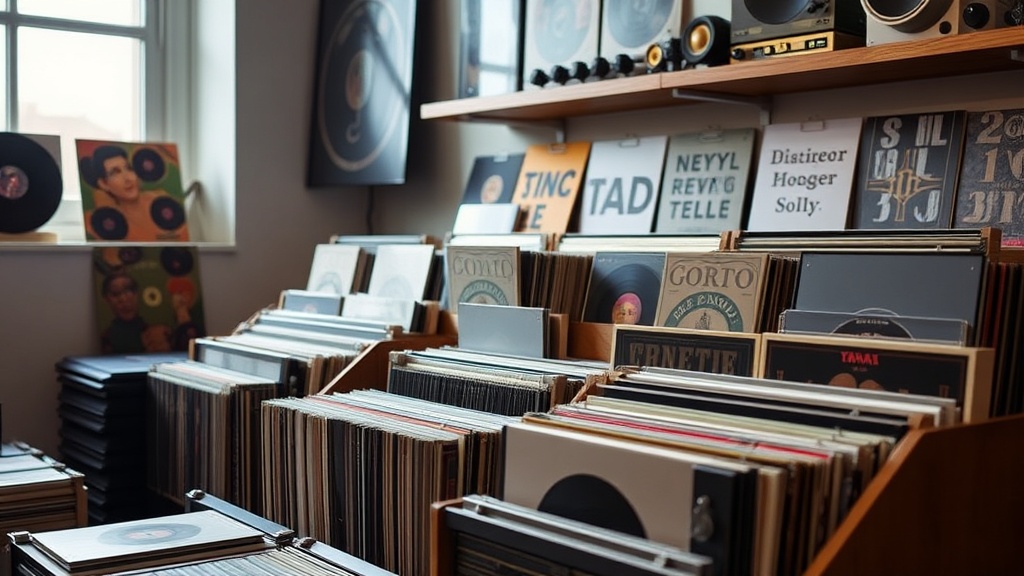
Flip-through bins and display shelves serve collectors who actually play their records. These systems—available from companies like LP Bin, Boltz, and DIY plans online—hold records at slight angles for easy browsing. The vinyl stays vertical, jackets remain accessible, and the collection becomes a room feature rather than hidden storage.
| Display Type | Best For | Price Range | Considerations |
|---|---|---|---|
| IKEA KALLAX shelving | Bulk storage, organization | $60-$180 per unit | Requires vertical support; add backing panels for stability |
| Flip-through bins | Active listening collections | $150-$400 | Limited capacity; excellent for 200-500 albums |
| Wall frames (per frame) | Featured albums, rotation displays | $15-$40 each | UV protection necessary; avoid direct sunlight |
| A-frame stands | Small collections, portability | $80-$200 | Holds 50-100 records; unstable on carpet |
| Custom built-ins | Dedicated listening rooms | $500+ | Professional installation recommended for weight loads |
That said, displaying sealed records or valuable first pressings carries risks. Temperature fluctuations near exterior walls, humidity from kitchens and bathrooms, and light exposure all accelerate deterioration. A record stored in a closet in Pennsylvania will outlast one displayed in a sunny Florida living room—no matter how nice the frame looks.
Climate-Controlled Storage for Serious Collectors
Collections exceeding a thousand records—or those containing valuable pressings—benefit from dedicated climate management. Portable dehumidifiers cost between $150 and $300 and handle rooms up to 1,500 square feet. The hOmeLabs 1,500 Sq. Ft. Energy Star Dehumidifier runs quietly and includes automatic shutoff when reservoirs fill.
Air circulation prevents stagnant pockets where mold develops. Small USB-powered fans—invisible when placed behind shelving units—keep air moving without disturbing dust. Some collectors install activated carbon filters near storage areas to absorb off-gassing from new pressings and cleaning products.
What Cleaning and Maintenance Do Records Actually Need?
Clean records before storage and after every play session. Surface dust grinds into grooves during playback, creating permanent noise. A carbon fiber brush—like the Audio-Technica AT6012 or Hunt E.D.A.—removes loose debris before the stylus touches down. These brushes cost under twenty dollars and last years with proper care.
Wet cleaning becomes necessary when records develop fingerprints, visible grime, or audible noise despite brushing. The Discogs community and audiophile forums document hundreds of home-brew cleaning solutions, but commercial products offer consistency. The Knosti Disco-Antistat bath system (around $80) handles manual cleaning with a simple rotation mechanism. For larger collections, vacuum-based machines like the Record Doctor V or Pro-Ject VC-E provide superior results at $300-$500 price points.
Here's the thing about storage maintenance: it's boring but necessary. Every six months, check shelves for sagging. Inspect outer sleeves for tears and replace them. Rotate records stored near display areas to prevent uneven light exposure. Philadelphia's humidity swings dramatically between seasons—collectors in similar climates should monitor conditions quarterly, not annually.
Cataloging software helps track condition and location. Discogs remains the free standard, with mobile apps for quick lookup. Collectorz and Music Collector offer paid alternatives with more strong (that word's banned—scratch that—more comprehensive) organizational features. Knowing exactly which pressing sits on which shelf prevents unnecessary handling and potential drops.
"The best storage system is the one you'll actually use. A $5,000 climate-controlled vault means nothing if accessing records becomes a chore and they stay unplayed."
— Common sentiment among working DJs and serious collectors
Ultimately, vinyl storage balances preservation against enjoyment. Sealed, climate-controlled archives preserve monetary value but miss the point of a music collection. Records stacked in direct sunlight degrade rapidly. The middle path—proper shelving, protective sleeves, stable conditions, and regular cleaning—keeps collections playable for decades without requiring museum-grade budgets.
Riley Singh runs vinylrecords.blog from Philadelphia, where the winters are dry and the summers humid enough to keep dehumidifiers running full-time. The site focuses on practical collecting advice, pressing quality assessments, and the occasional rant about modern remastering decisions.