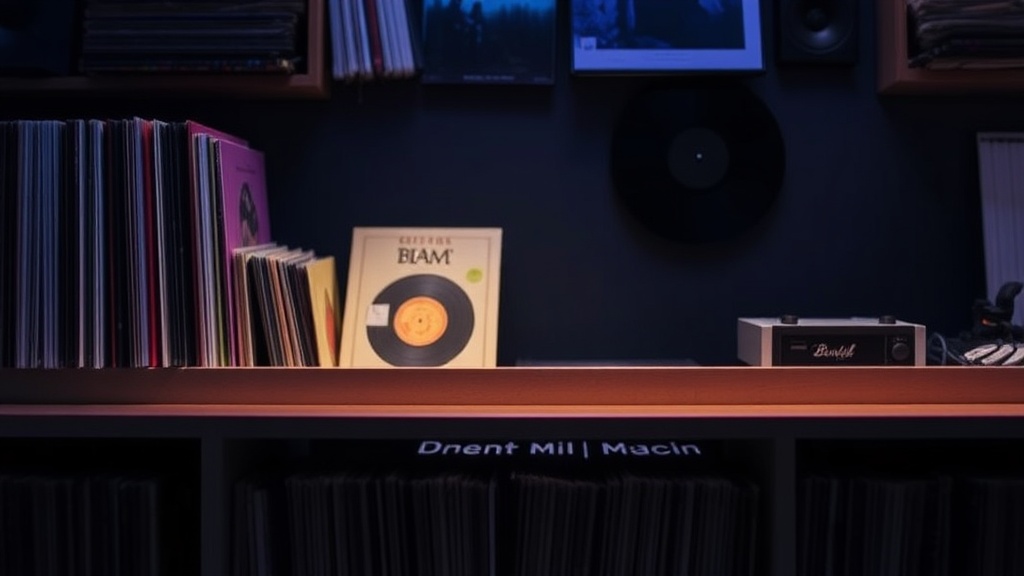
Why Your Record Collection Needs More Than Just Shelves

Most collectors believe that if they buy a sturdy bookshelf and keep their records upright, they've done enough. This is a mistake. A record collection isn't just a pile of plastic and cardboard; it's a delicate ecosystem of physical media that reacts to its environment every single second it sits in your room. Neglecting the subtle physics of your storage space leads to warped discs, damaged jackets, and even permanent grooves damage. This post covers the physical realities of long-term storage and how to manage the environmental factors that actually matter.
Does humidity affect vinyl records?
The short answer is yes—heavily. While the vinyl itself is relatively stable, the cardboard jackets and paper sleeves are hygroscopic, meaning they absorb moisture from the air. When humidity levels climb, those sleeves can become limp or even develop a subtle mold growth that transfers to the record. If you're living in a damp basement or a humid coastal area, you can't just ignore the air quality. High humidity can also cause the cardboard to swell, making the record sleeves stick together or even causing the vinyl to slightly deform if the temperature fluctuates wildly alongside the moisture levels.
You don't need a laboratory-grade climate control system, but you do need awareness. Keeping your collection in a room with steady airflow and avoiding damp corners is a good start. If you've ever opened a jacket and found it feeling slightly soft or "fuzzy," that's a sign your environment is working against your collection. Maintaining a consistent humidity level—ideably between 35% and 50%—is the sweet spot for preventing long-term degradation.
Should I store my records vertically or horizontally?
If you're reading this, you likely already know the answer, but let's be clear: never stack your records horizontally. Stacking records like pancakes creates immense pressure on the bottom copies in the pile. This pressure often leads to "ring wear," that unsightly circular imprint on the jacket that ruins the aesthetic and resale value. More importantly, the weight can actually cause the vinyl to warp or even crack if the stack gets too heavy. A heavy stack is a recipe for a flattened collection.
Vertical storage is the only way to go. However, the way you stand them up matters. If you lean your records at an angle, you're creating uneven pressure that can lead to warping over time. Your records should stand perfectly upright, supported by sturdy dividers. If your shelf is too full, don't force them in. A cramped shelf is a dangerous shelf. If you need to check a record, you shouldn't have to tug or pull on the top of the sleeve to get it out. If you find yourself doing that, your storage is too tight.
For more technical data on how materials react to environmental stress, you can check out resources like the National Archives, which provides extensive documentation on how various materials degrade in different climates. Understanding how paper and plastic react to the world is the first step in becoming a serious curator.
Can sunlight damage my vinyl collection?
The sun is one of the most underrated enemies of a record collector. It isn't just about the heat; it's about the UV radiation. Direct sunlight hitting your record jackets will cause colors to fade—turning a vibrant red into a dull pink in a matter of months. Even worse, the heat generated by direct sunlight can reach temperatures high enough to cause immediate warping. A record left in a sunny window is a record waiting to be ruined.
It’s a common mistake to display your most beautiful gatefold jackets in a sun-drenched living room. While they look great there, the light is slowly destroying the artwork and the physical integrity of the disc. If you want to display your collection, use a location that receives indirect light. If you're using a display shelf, ensure it's positioned away from windows or under a light source that doesn't emit heavy UV radiation. LED lighting is a much safer bet than old-school incandescent bulbs or natural sunlight.
Common Storage Mistakes to Avoid
Even with the best intentions, it's easy to fall into bad habits. Here are a few things to watch out for:
- The "Lean" Error: Leaning records against a wall instead of keeping them vertical.
- The "Tight Fit" Error: Jamming too many records into a single crate or shelf.
- The "Heat" Error: Storing records near radiators, heaters, or electronic equipment that emits heat.
- The "Direct Light" Error: Placing your collection in a spot where it receives hours of direct sun daily.
To ensure your collection remains a lasting legacy, you must treat it as a living thing that requires a stable environment. Whether you're a beginner with ten records or a veteran with thousands, the principles of temperature, humidity, and light remain the same. If you're interested in the chemical properties of various materials, the National Institute of Standards and Technology offers great insight into how environmental factors affect physical objects. Keeping your collection in a controlled, vertical, and shaded environment is the best way to ensure your music sounds as good in thirty years as it does today.
A well-managed collection is more than just a hobby; it's a commitment to preservation. When you respect the physical limitations of the medium, you're not just saving money—you're saving the music itself from the slow decay of a poor environment.